
Before You Buy a Rental Property in Denton, Answer These Questions: Single Family vs. Multi-Family
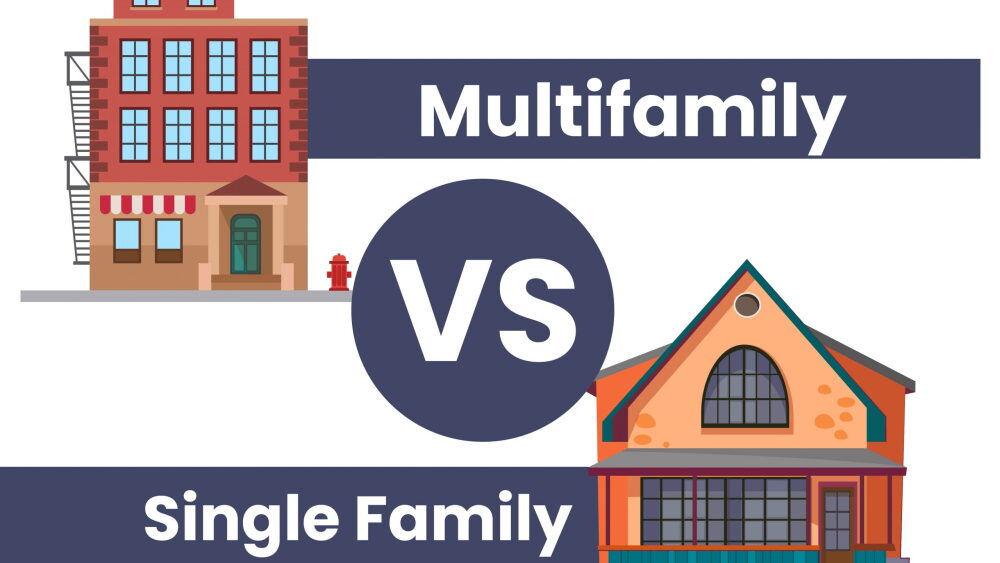

Most investors come to the single family versus multi-family question with a conclusion already forming. They have read something online, listened to a podcast, or talked to a friend who swears by one approach. And they are looking, at least partly, for confirmation.
I am not in the business of telling investors what they want to hear. I am in the business of helping them make decisions that hold up over time — through vacancies, maintenance surprises, market shifts, and the inevitable moments when owning a rental property is less passive than the brochure suggested.
So before I give you a framework for choosing between single family and multi-family investment in Denton, let me ask you a few questions. Your answers will tell you more about the right choice than any general comparison chart.
The Questions That Actually Drive This Decision
Question 1: What Do You Actually Need From This Investment Right Now?
There is a meaningful difference between an investor who needs the rental property to generate positive monthly cash flow — because that income supports their lifestyle or replaces other income — and an investor who is primarily building long-term wealth and can tolerate a break-even property while appreciation and equity accumulation do the work.
If you need cash flow now, multi-family is generally the stronger vehicle in Denton. Multiple rent streams from a single purchase produce more gross income, and the vacancy cushion means you are less exposed to a single bad month wiping out your returns.
If you are building long-term wealth and can be patient, single family in a strong Denton neighborhood has historically produced excellent appreciation and is easier to finance, manage, and eventually sell.
Question 2: How Much Management Complexity Are You Prepared For?
Every rental property requires management. Tenants call with maintenance issues. Units turn over and need to be prepared for the next occupant. Rent collection requires follow-through. Multi-family properties multiply these demands — not just because there are more units, but because there are more tenant relationships, more mechanical systems to maintain, and more variables that can go wrong simultaneously.
This is not an argument against multi-family. It is an argument for being honest with yourself about your bandwidth and your temperament. An investor who finds landlord responsibilities stressful is going to find a four-unit building significantly more stressful than a single rental home. An investor who is organized, systematic, and either enjoys the management side or is willing to pay for professional management will find multi-family much more manageable.
The best investment property is not the one with the highest theoretical return. It is the one you will manage well and hold through the inevitable difficult periods.
Question 3: What Does Your Financing Picture Look Like?
Single family investment properties and small multi-family properties (two to four units) both use residential financing — but the requirements differ in important ways. Investment property loans for single family homes typically require at least 15 to 20 percent down and carry slightly higher rates than owner-occupant financing. Small multi-family investment loans have similar or slightly higher requirements.
The exception worth knowing about: if you plan to live in one unit of a duplex, triplex, or fourplex — the house hacking strategy — you qualify for owner-occupant financing. This can mean a down payment as low as 3.5 percent on an FHA loan, or three to five percent on conventional owner-occupant products. The financial difference between investor financing and owner-occupant financing on a $400,000 duplex is significant and can meaningfully change the cash flow math.
As an ABR with a Home Finance Certification, I spend a lot of time on this piece of the conversation with investors. The financing structure is not secondary to the investment decision — it is central to it.
Question 4: What Is Your Exit Strategy?
The way you plan to exit an investment shapes the kind of investment you should make. If you plan to sell in five to ten years and want the broadest possible buyer pool — and the highest likelihood of appreciation-driven returns — single family in a strong Denton neighborhood is typically the better choice. Owner-occupants expand your buyer pool dramatically at exit, and emotional purchase decisions often push prices above strict investment return calculations.
If you plan to hold for twenty or thirty years, building a multi-family portfolio that generates income through retirement, the exit strategy looks different. You are less concerned about liquidity in the short term and more focused on consistent income over time.
What the Denton Market Offers Each Strategy
Denton is a market with genuinely strong fundamentals for real estate investment — but those fundamentals favor different property types in different ways.
Investment Goal | Better Property Type in Denton | Why Denton Specifically |
|---|---|---|
The Cash Flow Reality Check for Denton Investors
One of the most important services I provide for investors is helping them run realistic numbers before they commit to a purchase. The gap between optimistic pro forma calculations and actual investment returns is one of the most consistent sources of investor disappointment — and it is entirely preventable.
Here is what realistic cash flow analysis looks like for a Denton rental property. I will use a hypothetical single family rental versus a duplex at comparable total investment levels.
Single Family Rental — Hypothetical Denton Example
Purchase price: $320,000. Down payment (20%): $64,000. Loan amount: $256,000 at 7.5% — monthly P&I: approximately $1,790. Estimated property tax: $530/month. Insurance: $175/month. Total PITI: approximately $2,495/month. Market rent for comparable single family home in Denton: approximately $2,200 to $2,400/month.
After adding a vacancy reserve (7% of rent: $161) and a maintenance reserve ($267/month at 1% annually), gross cash flow before management is roughly negative to breakeven in many scenarios at this price point. The investment thesis here is equity building and appreciation — not immediate cash flow.
Duplex — Hypothetical Denton Example
Purchase price: $420,000. Down payment (20%): $84,000. Loan amount: $336,000 at 7.5% — monthly P&I: approximately $2,349. Estimated property tax: $735/month. Insurance: $220/month. Total PITI: approximately $3,304/month. Combined market rent for two units in a well-located Denton duplex: approximately $3,200 to $3,800/month depending on size and location.
After reserves, a duplex in the right Denton location can generate positive monthly cash flow — though the margin depends heavily on purchase price, rent levels, and management approach. The structural advantage is that a vacancy in one unit still leaves the other generating income.
Neither property type is inherently better. The question is which one matches your financial goals, your management capacity, and the specific opportunity in front of you.
The House Hacking Case in Denton
I want to spend a moment on house hacking because it is one of the most underutilized strategies among first-time real estate investors in Denton — and the math is genuinely compelling.
Here is the basic structure: you purchase a duplex, triplex, or fourplex as an owner-occupant, live in one unit, and rent the others. Because you are living in the property, you qualify for owner-occupant financing — potentially as low as 3.5 percent down on an FHA loan, compared to the 15 to 25 percent typically required for pure investment property financing.
The rent from the other units offsets your mortgage payment. In the best scenarios, the rental income covers the entire mortgage — meaning you are living essentially for free while building equity. Even in scenarios where it does not fully cover the mortgage, the subsidy is meaningful: a $2,000 mortgage payment subsidized by $1,200 in rental income means your effective housing cost is $800 per month.
In Denton, where there is consistent rental demand near the universities and in established neighborhoods, house hacking in a well-located small multi-family property can be one of the most capital-efficient ways to enter real estate investing while simultaneously reducing your own housing cost.
What I Help Investors Think Through in Denton
Whether you are a first-time investor or someone adding to an existing portfolio, the questions I focus on with every investor client are the same: What are your actual goals? What does your financing picture look like? What can you realistically manage? And what does the specific Denton market look like right now at the price point you are targeting?
I bring both my ABR designation and my Home Finance Certification to these conversations. That means I understand the transactional mechanics of buying investment property in Denton, and I can also have a substantive conversation about the financing options, loan structures, and cash flow implications of different approaches. I will always connect you with a licensed lender for the formal approval process — but I can help you go into those conversations prepared.
FAQ: Single Family vs. Multi-Family Investment in Denton, TX
Can I get an FHA loan for a duplex in Denton if I live in one unit?
Yes. FHA loans are available for two-to-four unit properties as long as you occupy one of the units as your primary residence. The minimum down payment is 3.5 percent for borrowers with a 580 or higher credit score. This is one of the most accessible entry points into multi-family investing for buyers who are willing to live in the property. The trade-off is that FHA loans include an upfront mortgage insurance premium and ongoing monthly mortgage insurance, which affects your cash flow math. It is worth modeling both FHA and conventional options to see which structure works better for your specific numbers.
What kind of returns should I expect from a rental property in Denton?
Returns on Denton rental properties vary significantly based on property type, purchase price, financing terms, and management approach. As a general orientation: single family rentals in Denton have historically produced strong appreciation and moderate cash flow — many are near breakeven on a monthly basis at current prices and rates, with the investment thesis resting primarily on long-term equity building. Small multi-family properties in high-demand locations can produce positive monthly cash flow, with the trade-off of higher management complexity. Neither return profile is guaranteed, and realistic underwriting before purchase is essential.
Is Denton a good market for real estate investors?
Denton has several characteristics that make it a genuinely attractive investment market: consistent population growth driven by two major universities and DFW metro expansion, a strong and diverse rental tenant pool, relative affordability compared to many DFW suburbs, and the kind of long-term demand fundamentals that support both appreciation and occupancy. It is not a get-rich-quick market — no reliable investment market is — but for investors with a long-term perspective and realistic expectations, Denton has consistently rewarded patient, well-prepared investment.
How do I find a duplex or small multi-family property for sale in Denton?
Small multi-family properties in Denton do come to market through the MLS, but they move quickly when priced well. Working with an agent who actively tracks investment property inventory and understands the investment return analysis is important — because a duplex that looks attractive on price may not make financial sense at closer inspection, and vice versa. I work with investors in Denton regularly and can help you identify opportunities, run the numbers, and move efficiently when the right property comes available. Reach out at erinrooks.kw.com.
What is the biggest mistake investors make when choosing between single family and multi-family?
Choosing based on what sounds better in theory rather than what fits their actual situation. Investors who choose multi-family because they have heard it produces better cash flow, without accounting for the management demands and the specific Denton price points, often end up with properties that underperform their expectations. Investors who default to single family because it feels safer, without considering whether house hacking might dramatically reduce their entry costs, sometimes miss a compelling opportunity. The best choice is always the one that aligns with your financial goals, your bandwidth, and the specific properties available in your target market right now.
Other Resources
External Authority Resources
National Association of Realtors — Investment and Rental Property Resources: https://www.nar.realtor/research-and-statistics
Consumer Financial Protection Bureau — Financing Investment Properties: https://www.consumerfinance.gov/owning-a-home/
Denton Central Appraisal District — Property and Tax Data: https://www.dentoncad.com
Erin Rooks — Rooks Realty Group
Erin Rooks, ABR | Rooks Realty Group | Keller Williams Denton: https://erinrooks.kw.com
Instagram: @RooksytheRealtor | Facebook: Erin Rooks – KW Denton
Ready to run the numbers on a Denton investment property? Let’s talk: https://erinrooks.kw.com
Tags: